


At the moment, there are no entries available for display




Business Review


Agribusiness
Palm oil
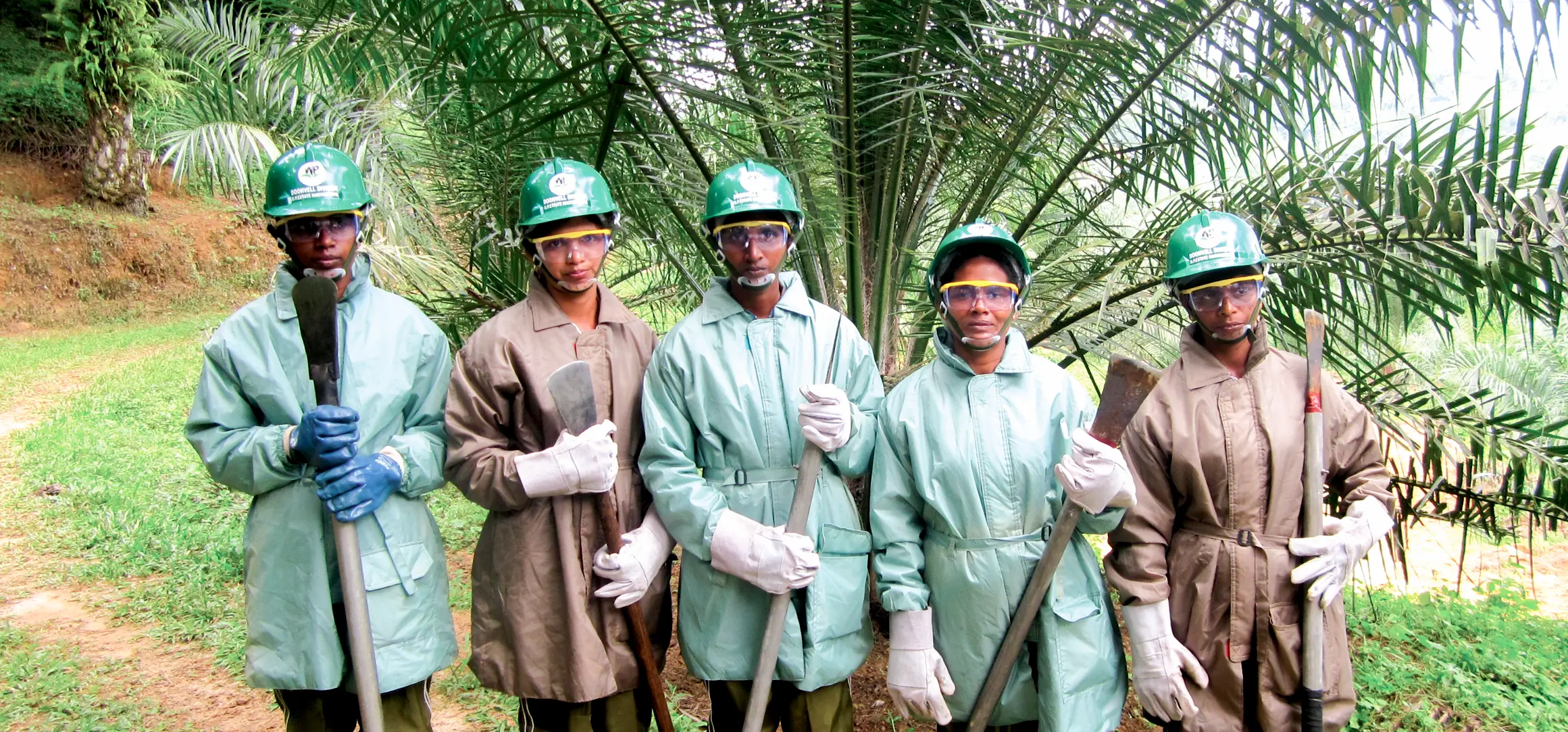
The only South Asian plantation to earn RSPO certification, our oil palm business is widely regarded as a model for sustainable, socially responsible oil palm cultivation
Generating over Rs. 6.8 Bn. for the Group every year, our oil palm operations – managed by Watawala Plantations PLC – span 3,393 hectares, supported by a single integrated mill. While the plantation portfolio includes rubber, tea, cinnamon, and coconut, these remain minor in scale and strategic focus relative to palm oil.
Watawala Plantations PLC, a joint venture between Sunshine Holdings PLC and Pyramid Wilmar Plantations, manages our palm oil business, which may be considered the backbone of the Agribusiness segment. The business operates Sri Lanka’s largest and, arguably, most efficient palm oil mill, producing crude palm oil (CPO), palm kernel oil (PKO), and palm kernel cake. With sustainability at the forefront of our strategic focus, over 95% of the mill’s energy demand is met through biomass generated from processing by-products, helping Sunshine maintain the pace of the Group’s decarbonisation journey.
The first South Asian plantation to earn RSPO certification, our oil palm business is widely regarded as a model for sustainable, socially responsible oil palm cultivation. The ISO 45001 accreditation for worker safety is another feather in its cap, as Watawala sets the standard in both environmental and operational performance.
The plantation employs over 1,500 workers in international best practices, working in different capacities across the Company’s 3,393 hectares. In the 2024-25 financial year, it supplied over 15,000 MT of palm oil to six local refiners and brands, accounting for roughly 50% of the country’s total production.
While no crop is without an environmental cost, oil palm’s relatively shallow root system limits its draw on groundwater, consuming less than tea, rubber, or coconut. This notwithstanding, Watawala Plantations conducts regular environmental assessments, including water table monitoring and freshwater stream testing, to ensure compliance and mitigate risk, especially given the climate of intense scrutiny around oil palm.
Meanwhile, treated wastewater from the Nakiyadeniya mill is repurposed for field application, reducing chemical fertiliser use. It is a point of pride for Watwala that steam from the palm oil unit’s biomass byproducts (shell, and fibre) powers boilers to generate steam required for milling and run turbines that meet 90% – 95% of the mill’s energy needs, cutting fossil fuel reliance and emissions significantly.
The ban on oil palm replanting and new cultivation has remained, with some speculation over recent years that its lifting was imminent. Nevertheless, Watawala is poised to scale rapidly, having invested ahead of the curve in nurseries and infrastructure. Should the ban be lifted, as anticipated, the business intends to intensify its focus on palm oil while scaling back diversification into other crops, except cinnamon, which remains strategically relevant, though at lower yields.
FY 2024-25
highlights
Watawala Plantations’ palm oil operations saw continued strengthening in 2024-25, with yield improvements remaining on track and fresh fruit bunch (FFB) output rising to 16 metric tons per hectare. These developments were driven by ongoing agronomic interventions, including pruning, field access improvements, and the systematic clearing of underperforming blocks. Extraction rates also recorded an uptick, reaching 24.4%, up from 23.7% in prior years – gains that speak to not just our exemplary operational discipline but also the impact of refined harvesting protocols and technical input from Malaysian agronomy consultants.
Energy self-sufficiency continued to advance meaningfully during the year under review. Over 95% of the mill’s energy demand was met through biomass generated from palm byproducts such as shell and fibre, providing the business a keen sense of energy independence. Steam generated from this biomass is now used to power in-house turbines, covering roughly 30% of the facility’s electricity needs. These systems have further reduced reliance on fossil fuels and grid power, advancing the Group’s broader decarbonisation agenda.
Environmental safeguards were deepened across the estates in 2024-25. Treated wastewater from the Nakiyadeniya mill was reused in the fields, reducing chemical fertiliser use while maintaining compliance with COD/BOD discharge thresholds. Fertiliser application remained restricted in riparian zones, with red-banded demarcations and regular water table monitoring ensuring minimal ecological disruption.
Community engagement also remained central to Watawala’s operating outlook. The company continued to provide school transport, medical outreach, and road maintenance services while offering local contracting opportunities for activities such as FFB transport. These initiatives have not only fostered trust but also contributed to workforce stability in a context where plantation labour relations remain fragile.
While the national ban on oil palm replanting and new cultivation remained in place, the business sustained forward momentum through pre-emptive nursery investments and ongoing engagement with policymakers. Post-election dialogue has also given rise to cautious optimism, that has the business anticipating with quiet eagerness a lift to the ongoing ban.